 AI concept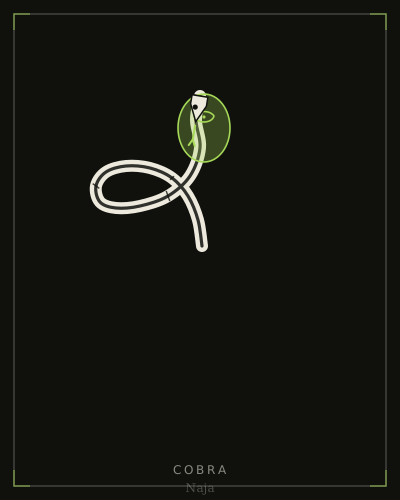
Original SnakeTattoos natural-history plate.
Species
Cobra
Naja spp.
The cobra is the most recognizable snake in the world — the flared hood, the upright strike posture, the unblinking stare. It is the snake people draw when they want presence.
What it looks like
A broad, flattened hood when threatened, smooth scales, and an upright posture with the head raised. The "spectacle" marking on some species (like the Indian cobra) is a famous visual detail.
Venom note
Cobras are elapids with potent neurotoxic venom delivered through short, fixed front fangs. They are genuinely dangerous animals, and that danger is part of their power as a motif.
How it translates into a tattoo
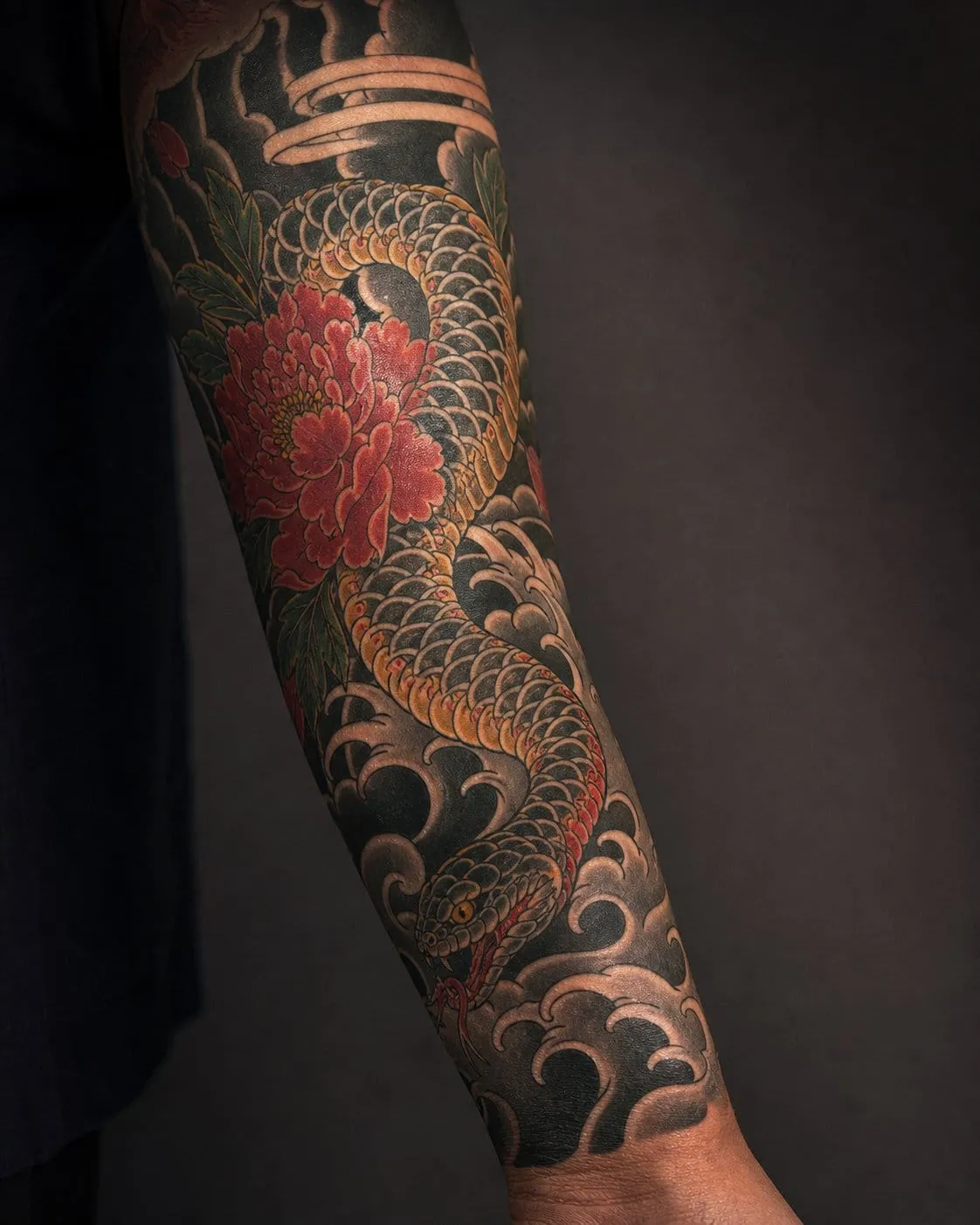
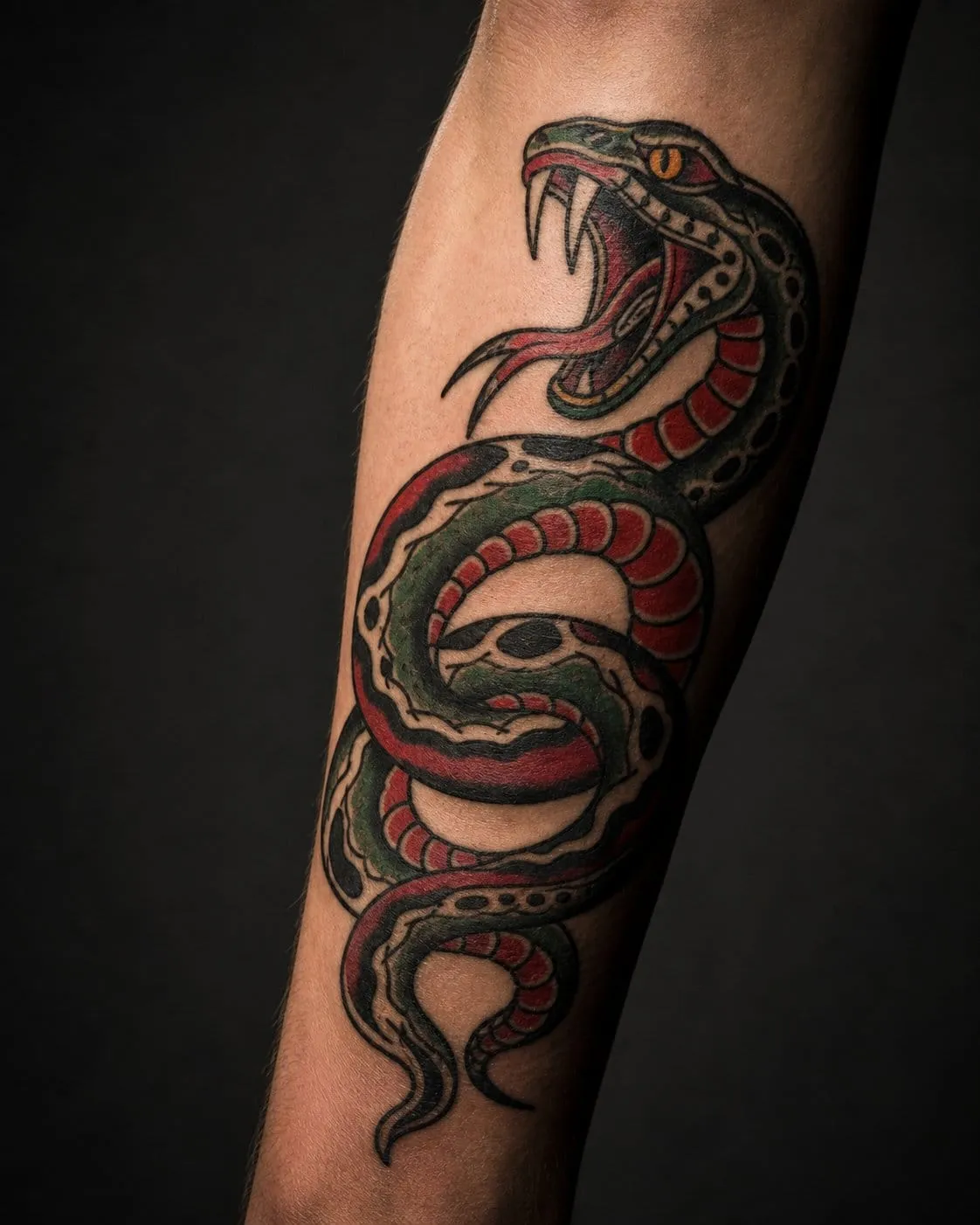
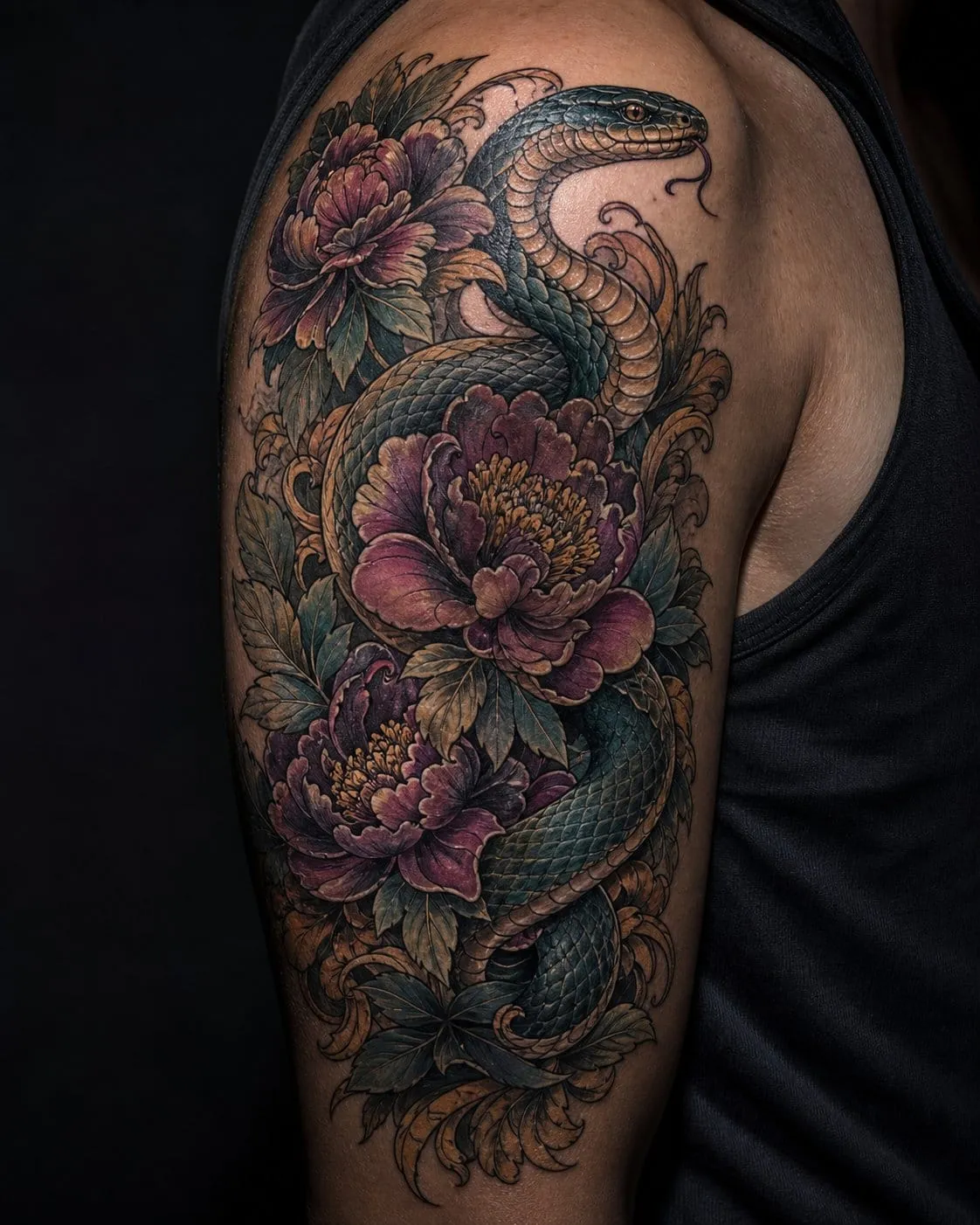
An upright cobra with a flared hood, drawn in profile with the hood spread wide, is the single most classic snake-tattoo pose. It works in almost every style — bold traditional, fine line, realism, blackwork.
What it symbolizes
In tattoo culture the cobra reads as warning, protection and regal power — a boundary drawn, not a threat made. The upright posture is defensive, not aggressive, which is why it lands as "protect what is mine" rather than "I bite."
Cultural context
In ancient Egypt the rearing cobra (the uraeus) sat on the pharaoh’s crown as an emblem of sovereignty and divine protection. In South and Southeast Asia, cobras are widely revered — in Hindu tradition the naga and figures like the cobra-headed Naga are sacred guardians, not villains. These are living cultural and religious symbols; a cobra tattoo is not automatically a religious statement, but the association is real and worth knowing.
Styles that suit it
Cobra designs
See all → AI concept  Original plate
  AI concept
  AI concept
 From vague idea to a concept you can take to an artist.
Explore the library, save what moves you, then build a direction — style, species, placement, size and mood — and turn it into a brief.