Symbolism · 9 min read
Snake Tattoo Meaning: Symbolism Without the Myths
What a snake tattoo actually symbolizes — the biology, the real cultural traditions, and the modern meanings — without the invented "ancient meaning" filler.
Why the snake means so many different things
The snake is one of the most symbolically loaded animals in human history — and that is exactly the problem. Ask five websites what a snake tattoo means and you get five lists, many of them copying each other. The truth is more interesting: the snake carries so many meanings precisely because it is real. People did not invent its symbolism out of nothing; they watched it.
A snake sheds its skin whole, so it became transformation. It can kill with venom, so it became danger and power. Some species guard their ground, so it became protection. It was used in medicine, so it became healing. The meanings are grounded in observed behavior — which is why they appear, in different forms, across cultures that never spoke to each other.
The meanings that hold up
Transformation and renewal is the strongest and most universal thread, tied directly to shedding skin. It is the single most common reason people today choose a snake, and it needs no mythology to support it.
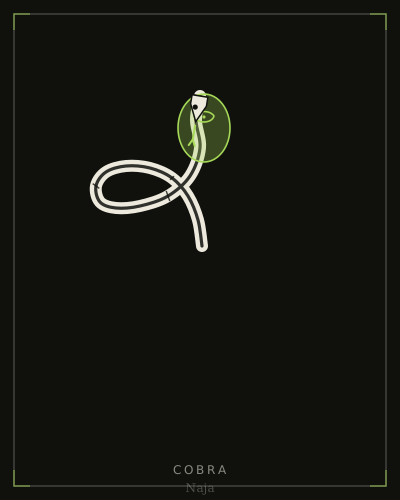
Protection and warning is the second: a coiled or upright snake reads as a boundary. The cobra’s defensive hood — raised when threatened, not when attacking — is why it lands as "protect what is mine" rather than "I bite."
Healing is the third, via the Rod of Asclepius: a single serpent around a staff, still the emblem of medicine. A snake tattoo after an illness or recovery is one of the most personal and honest uses of the symbol.
Duality is the fourth: the same animal that heals also harms, feared and revered at once. Temptation — the Eden serpent — is real but belongs to a specific religious tradition, not to the animal.
What the animal itself contributes
Species changes the read. A cobra is regal and watchful; a viper is heavy and defensive; a python is patient strength; a rattlesnake gives warning before it strikes; an ouroboros is eternity. A tattoo of a specific species is a more deliberate choice than a generic serpent — it says you thought about the animal, not just the symbol.
Posture matters just as much. Coiled reads watchful. An S-curve reads moving. A striking pose reads confrontational. A snake mid-shed reads changing. The same snake in different poses means different things.
Meanings that are invented (or borrowed badly)
A lot of "snake tattoo meaning" content is invented, copied, or flattened. Claims that the snake meant the same thing "in all ancient cultures" are false. The Egyptian uraeus, the Hindu naga, the Japanese hebi, the Greek Asclepius, the Norse Jörmungandr — these are different traditions with different meanings, and flattening them into one paragraph is how misinformation spreads.
If a cultural or religious image speaks to you, research that tradition specifically — or better, work with an artist from that background. Borrowing sacred imagery without understanding it is exactly the kind of copying this site exists to prevent.
How to choose a meaning that is actually yours
Start from your life, not from a list. What changed? What did you survive? What are you guarding? What cycles are you living through? The meaning of your tattoo is the one you can explain in one sentence — to yourself, and later to the person who asks. If a tradition gives you language for that, use it with respect. If no tradition fits, that is fine too: a snake you chose because you love snakes is a complete and honest meaning all by itself.